Pack for rain and wind in every season: a waterproof jacket with a hood, layers you can add and remove, and comfortable shoes that cope with wet ground. Add a Type G plug adapter, because Ireland and Northern Ireland use the same three pin plug as Britain. Get those right and the rest is easy.
Why you need layers in every season
Irish weather changes quickly. A sunny morning can turn to rain by lunch and clear again by the afternoon.
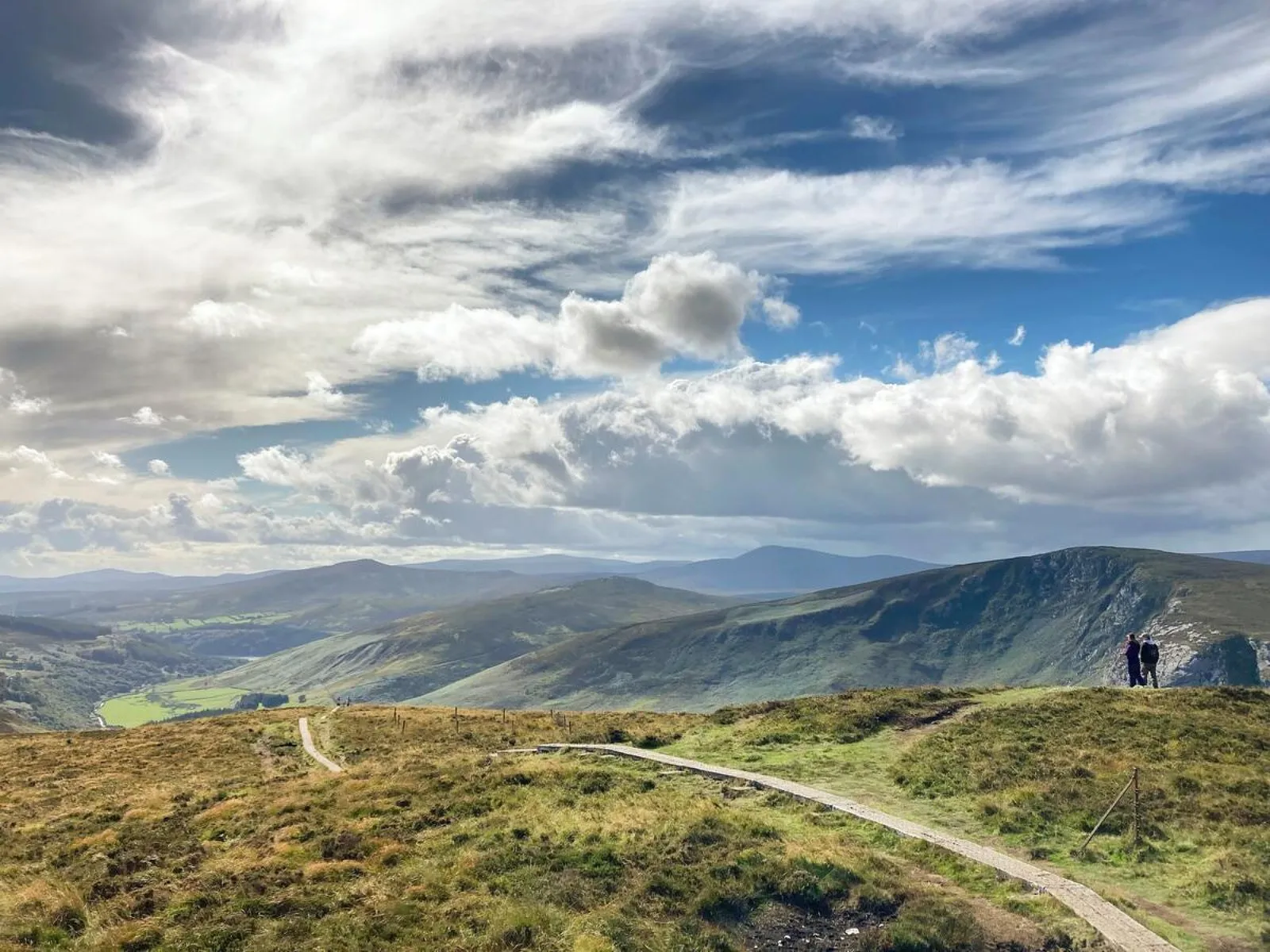
Temperatures stay mild. Inland summer days usually reach about 18 to 20°C (64 to 68°F), and winter days about 8°C (46°F), according to Met Éireann. It rarely gets very hot or very cold. What catches people out is wind on the coast, which makes 15°C feel much colder.
So pack thin layers, not one heavy coat. You can then add or remove a layer every time you get out of the car.
The core packing list for any season
- Waterproof, windproof jacket with a hood. This is the single most useful item.
- 2 or 3 base layers or T shirts.
- A warm mid layer, like a wool sweater or fleece.
- Comfortable trousers or jeans, plus one quick dry pair if you plan to walk.
- Waterproof walking shoes or trail shoes that are already broken in.
- A small daypack for snacks, water and your spare layer.
- Type G plug adapter (or 2).
- Phone charger, and a power bank in your hand luggage.
- Sunglasses. Low winter sun on wet roads is a real glare problem for drivers.
- Any prescription medicine, in its original packaging.
What to add for each season
Summer (May to August)
- Light jumper or cardigan for cool evenings.
- Sun cream and a hat. You can burn on a windy, cloudy day.
- Shorts or a summer dress for warm spells, but always with a layer in your bag.
- Swimwear if you might try a sea swim or a hotel pool.
Long summer days mean late evenings outside. Around 21 June the sun sets in Dublin just before 10pm (Gaisma), and it gets cool after 8pm.
Winter (November to February)
- A warmer waterproof coat, or a warm layer that fits under your rain jacket.
- Hat, scarf and gloves.
- Waterproof boots with good grip for wet paths and icy mornings.
- Thick socks, and a spare pair for the car.
December is the wettest month on average (Met Éireann), and you only get about 7.5 hours of daylight around the shortest day. Plan outdoor stops for the middle of the day.
Spring and autumn
March, April, September and October can feel like either season. Pack your summer list plus a warm hat, light gloves and a scarf. Our guide to the best time to visit Ireland explains what each month is like.
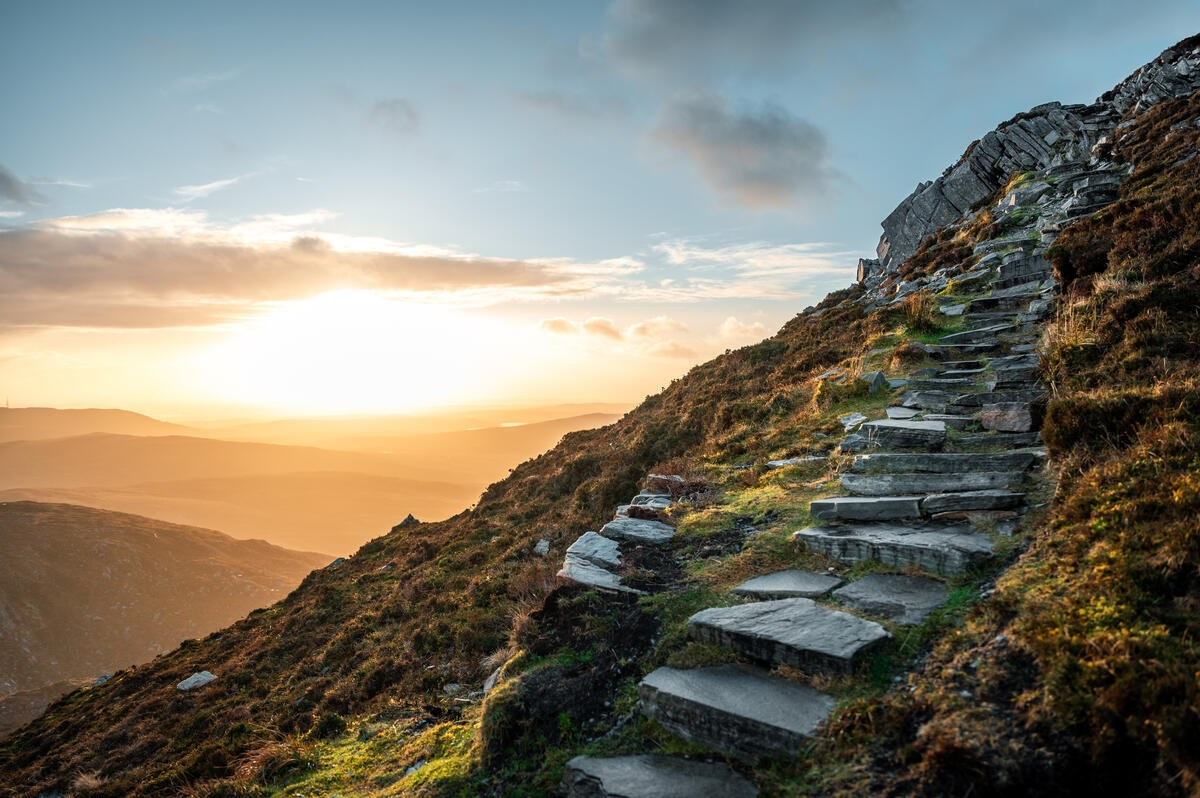
Photo: Christoph Partsch / Tourism Ireland, via Ireland’s Content Pool
Which shoes work best?
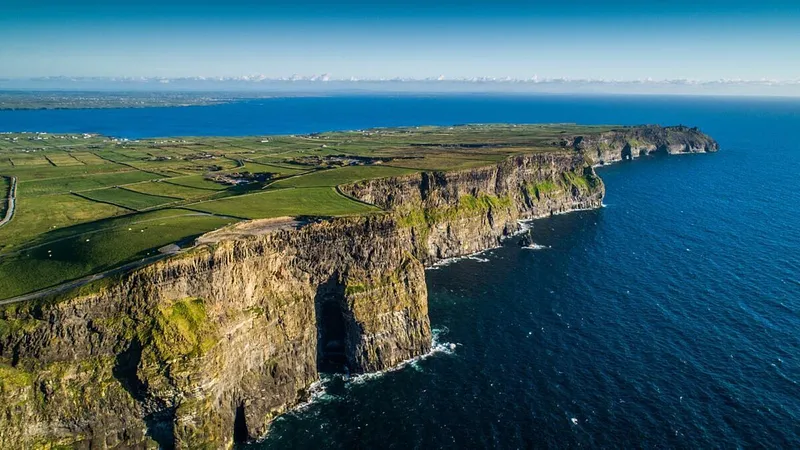
You walk more than you expect in Ireland. Dublin has cobbles. The Giant’s Causeway has wet, uneven stones. The Cliffs of Moher and Slieve League paths can be muddy.
Bring one pair of waterproof walking shoes and one lighter pair for evenings. Leave new boots at home, because blisters on day 2 ruin a trip. Rain boots are only worth packing for farm stays or serious walks.
Plugs, voltage and phones
Ireland uses Type G plugs at 230 volts and 50 Hz (World Standards). Northern Ireland uses the same plug.
- Phone and laptop chargers usually say 100 to 240V on the label. These only need a plug adapter.
- Hair dryers, straighteners and curling irons made for the US are often 120V only. They need a voltage converter, or they will burn out. Leave them at home.
- Check your phone plan before you fly. Roaming can be expensive. An eSIM or a local SIM is often cheaper for a week or more.
Airport liquid rules for your trip
Rules differ between airports, so pack your hand luggage for the strictest one on your route.
- Leaving the US: TSA still applies the 3-1-1 rule. Each container must be 3.4 ounces (100 ml) or less, all in one quart sized bag (TSA).
- Leaving Dublin Airport: the 100 ml limit no longer applies. Containers up to 2 litres can go through security, and liquids do not need a plastic bag (Dublin Airport).
- Flights from Dublin to the US: powders like coffee, sugar or flour are limited to 350 g (12 oz) in hand luggage. Anything more goes in your checked bag.
- Power banks: keep them in hand luggage, never in checked bags, and under 100Wh.
Packing for the flight home? Put whiskey, jam or anything bought in a gift shop in your checked bag. It saves arguments at security on connecting flights.
Documents and money
- Passport, valid for your whole trip.
- A UK ETA if you plan to visit Northern Ireland, even for a day trip. Our guide to Ireland vs Northern Ireland explains what changes at the border. It costs £20 per person and you apply through the UK ETA app or GOV.UK (Ireland.com).
- Your physical driving licence if you will drive. Rental companies do not accept photocopies or digital licences (Sixt Ireland).
- A credit card in the main driver’s name for car hire. Read renting a car in Ireland before you rely on card insurance.
- A second bank card, kept separate from the first. See money, cards and tipping in Ireland for which cards work best.
What not to pack
- An umbrella. Wind breaks them on the coast. A hood works better.
- Formal clothes. Ireland is casual. Smart casual is enough for good restaurants and most hotel bars.
- Too many shoes. 2 pairs is plenty for most trips.
- US hair tools. See the voltage note above.
Questions people ask
Do I need an umbrella in Ireland?
Not really. Wind turns most umbrellas inside out, especially on the coast. A waterproof jacket with a hood is far more useful.
What shoes should I wear in Ireland?
Waterproof walking shoes or trail shoes with good grip. You will walk on cobbles, wet rock and muddy paths. Make sure they are broken in before you travel.
Do I need a power converter for Ireland?
You need a Type G plug adapter for everything. You only need a voltage converter for single voltage US appliances, like many hair dryers. Most phone and laptop chargers work on 230V.
Can I wear jeans in Ireland?
Yes. Jeans are fine almost everywhere, including pubs and most restaurants. They are slow to dry, so add a quick dry pair if you plan to walk in the rain.
What should I wear in Ireland in summer?
Light layers, a warm jumper for the evening and a rain jacket. Summer days are usually 18 to 20°C (64 to 68°F) inland and cooler on the coast.
Read next: Best time to visit Ireland, month by month
Sources
- Temperature, Met Éireann
- Rainfall, Met Éireann
- Dublin sunrise, sunset and day length, Gaisma
- Ireland power plug, socket and mains voltage, World Standards
- Liquids rule, TSA
- Prepare for security, Dublin Airport
- Electronic Travel Authorisation, Ireland.com
- Car rental information Ireland, Sixt
- What to pack for Ireland, Lonely Planet
- What to wear in Ireland, The Irish Road Trip
Cover photo: Chris Spierin / Fáilte Ireland, via Ireland’s Content Pool.
See it with a local guide
Private tours across Ireland, run by the guides themselves. Ask a question or request a date, nothing to pay until they confirm.
Browse tours